Tuesday, June 3, 2008


Good evening, 919 Gang, and we have distressing news tonight
CHERYL CLARK writes:
I just heard from Karin Winner that Al JaCoby died early this morning, apparently in his sleep.

BOB WITTY writes:

Pat JaCoby called me this morning to tell me that Al had died last night in his sleep. I was to have lunch with him and Neil Morgan and another friend, architect Bob Mosher, today at the MOCA cafe in La Jolla. Pat said we should go ahead and leave an empty seat for Al, which we did.

Al was an outstanding journalist, a brilliant curmudgeon ( and much loved for a curmudgeon), and could discuss any subject. His birthday was Sunday.

JR: Bob Witty also said the U-T will do an obit on him for Tuesday. And I presume that will have details on services. I am certain many of you will have memories of Al to share with us. For my contribution, I will reprint this story which Al wrote for the first edition of the merged Union and Tribune Feb. 2, 1992. And thanks to Dick Harrington who retrieved this for me maybe two years ago.

AL JaCOBY wrote:

Oh, the things we did! The places we went! The people we knew! The fun we had!
Being a newspaper man -- or woman -- in the years since World War II in San Diego meant total dedication to proving the old saw that reporters met the most interesting people -- and most of them were in the newspaper business.
We worked hard. We played hard. We drank hard.
Oh, the changes!
The other evening, one of The San Diego Union's brightest and most talented young reporters was in the men's bathroom, changing from his daytime suit into running togs and shoes, and then he was off to the gym. The gym bag is a regular sight these days in the newsroom. The noontime racquetball games are discussion topics at midafternoon news planning meetings.
Other staffers routinely bicycle to the Union-Tribune's Mission Valley office, and there are regular notices on bulletin boards of weekend multi-miled biking trips.
Oh, the difference! For the better, of course.
But, oh the fun we had -- or thought we were having!
Several high-level editors, who these days lead exemplary and predictable lives, had their salad days. One, for example, often was seen late at night playing ragtime piano in a run-down sports bar. Another editor, now dignified in London-cut suits, was one of a group of young reporters who would close the bars in San Diego and then roar down old Highway 101 to Tijuana, where the bars never seemed to close.
In truth, we were mostly newspapermen because the business, which is still far too much a bastion of white males, was truly masculine then. I can remember, back in the early 1950s, only one woman reporter, a sweet spinster lady. She knew she had to drink and smoke as well as any of us to prove her worth.
There were women in what then was called The Society Department, of course, but they didn't count because they wrote what we called "soft" news, and we were hard-bitten newsmen.
The best-known newspaper bar was the most convenient -- the Press Room right across Second Avenue from the old green-painted moderne U-T building.
The Press Room claimed to be the oldest operating saloon in San Diego and had dozens of framed photographs of news events, news people and news pages on its walls.
In the third-floor newsroom, one could casually say, "I'm going to run down to the Composing Room" (which was on the second floor), then duck down the back stairs, walk through the Composing Room and down to the ground floor and dash across Second Avenue. Press Room bartenders seemed to know when speed was essential.
A few quick gulps, and it was back across the street, up the stairs through the Composing Room and back into the newsroom, with no one the wiser, or so we assumed.
It was an unwritten, unspoken law, of course, that this wasn't done on deadline.
The Press Room, of blessed memory, is Dobson's now, but it's not the same.
We wonder, ruminating about the Good Old Days, what happened to the photographs.
In the 1960s, the favorite night-side news bar was the old Sheng Haw Low, on the second floor of a building between Broadway and C Street, across from the U.S. Grant Hotel. Sheng Haw Low was owned by a tall, amiable Chinese named Tommy Sheng. He had made his basic Cantonese restaurant into a hangout for news types, cops, lawyers and the occasional judge by a simple expedient -- cheap food and ample drinks.
Like Rick's in Casablanca, everybody went to the Sheng Haw Low. Even the ladies of the Society Department stopped by.
Tommy Sheng's greatest asset was his short, twinkly eyed bartender, Robert C. (Bobby) Tom, who knew us all, knew our drink preferences, knew our work schedules, and, above all, knew how to pour a drink.
For eternally short-funded news types, Sheng Haw Low was a godsend. It was a Chinese restaurant but the Luncheon Steak -- a nice piece of meat, fried rice, and a salad -- costing $1.25 was the odds-on favorite, even at night.
Tommy Sheng, whose English never equalled his hospitality (you could hold a five-minute conversation with him and never understand a word), was free-handed with the gotlet chicken and other appetizers.
Many a news story was developed from the lawyers, cops and judges who frequented the place.
The Grant itself was the center of the world then: Conventions, luncheon clubs, cocktail parties -- all were centered in the weathered old building between Third and Fourth avenues on Broadway. The Grant Basement was a hodgepodge of meeting rooms, large and small. The Grant's luncheon club menu of chicken and peas was a dependable standard. The Grant's rumaki, a piece of chicken liver wrapped in greasy bacon, was offered in great trays at any cocktail party. It was favored over the dollops of red caviar plopped on tiny rounds of white bread, also offered.
Out-of-town guests were always taken to El Cortez Hotel, long since closed, which in later years had a glass elevator running from the lobby to two top floors, with their glorious views of downtown and the harbor. This was pre-high rise, and the El Cortez, on its hillside locations, was our best example of skyscrapering.
The men and women of The Union who practiced newspapering were fabled, even then.
Salaries were low and everyone attempted freelance writing to supplement income. One reporter was famous for his years of submitting articles, which were always rejected, to national magazines. He finally made it to one of the magazines -- with an article about the many articles he'd had rejected.
One reporter is still recalled by those who were there for the night he hurled a hamburger (it didn't have the tomatoes he'd ordered) at a nearby wall, where it stuck. Months later, when we moved out of the building, the stain was still there.
It was rumored that this same reporter, in a fit of anger, had tossed a typewriter out of a third-floor newsroom window but this was never confirmed. Our ancient Underwood manual typewriters were too heavy for throwing.
Still another reporter always carried around the guilt of his misdeeds, probably because he was the son and grandson of Methodist ministers. "I've quit drinking," he told me one afternoon. "I can't take the hangovers in the morning." Why didn't he just sleep later, I asked, with what seemed like good logic.
"Can't," he answered. "Got to be up early to jog." He'd broken from his Methodist upbringing but he still knew he had to be punished for his transgressions.
Some of the copyreaders, the skilled men (and now, women) who regularly rescue reporters' copy in the editing process, were especially odd. One, who had worked at the paper for many years, resented any newcomer who might, in error, sit in his chair on the horseshoe-shaped copy desk. He wouldn't politely ask the newcomer to move; polite wasn't in his vocabulary. Instead, he'd sit and glare at the miscreant, who soon became aware of the angry stare in his direction.
Then there was the movie critic, a short man, hardly five feet tall, with rather short legs. He wandered from the Grant Grill one night onto Third Avenue, decided he was tired, and sat down on the curb, which was especially high at this point. His short legs just made the pavement and as he sat there, he hailed a passing "taxicab."
Unfortunately, this cab was a black and white police squad car.
Photographers were famous. One risked his job on a social event photo shoot when he snarled at a bossy admiral that "you sail your ships, sonny, and I'll take the pictures." Another, later a picture editor, was immortalized in a Press Room Bar photo dancing on the stage of the Hollywood Burlesque Theater with Texas Bobby Roberts, a home-grown stripper.
The photo lab, too, had its special moods. On Friday night, those in the know knew that the developer trays in one tiny lab would be filled with gin.
Our transgressions seemed major at the time; now they seem minor in memory.
In between, we worked hard and produced a newspaper every morning.
The U-T building itself was a collection of buildings, additions, remodels and partitions, just off Broadway with entrances at 919 Second Ave. and 940 Third Ave. Talk of a New Building went on forever. The new building became a reality in 1973 with the U-T's present modern complex in Mission Valley, a dream of James S. Copley's which, ironically, was occupied on the night he died of cancer.
The new building in Mission Valley was modern, spacious and clean. Naturally, we missed the old building.
The nearest bar-restaurant was just far enough away to prevent quick drink breaks. Another motel, across the freeway, tried to attract the newscomers with a bar named the Pen and Pun and decorated with Old New Yorker cartoons, but it never caught on. The nearby Holiday Inn housed the San Diego Press Club for a while but, at night, was quiet as a post-deadline newsroom.
What we didn't realize was that the move to Mission Valley came just as the city's newspapers were maturing and its news types were growing up, too.
Homes in the suburbs and families and the healthy life took over just about the same time the U-T got a building with air conditioning that worked.
Wine spritzers became the greatest sin at noon-time drinking sessions; the chef's salad and put the dressing on the side replaced the hot beef sandwich with extra gravy. A way of life was replaced by a Way of Life.
On that final night -- Saturday, Oct. 6, 1973 -- in the old building downtown, on the night Jim Copley died, our lives were to change forever, though we didn't know it.
About 3 a.m., after the last edition was in, after the bars had closed, after virtually everyone had gone home, I stood alone amid the detritus of most of my working life, in the dirty old Union newsroom with its sea of scrap paper on the black linoleum-tile floor.
There were half-empty coffee cups on the battered old desks, stacks of old newspapers, stubs of copy pencils and tattered carbon paper (why was there never any new carbon paper?) There was an ancient bulletin board with ancient work schedules and ancient jokes and ancient headlines and notices of freeloads long gone.
I was angry because there was to be change, and newspaper types, though they may claim to be far-seeing and adventuresome, hate change; I was sorrowful because a man who had been my top boss for years was dead. I was even a bit afraid because who could know the future.
And, thinking of T.S. Eliot's stricture that the world ends not with a bang but with a whimper, I picked up a slug of lead printing type.
"There has to be some sort of bang!" I yelled, though there was no one in the newsroom to hear, and I threw the slug as hard as I could at a glass-doored official-notice bulletin board on a wall 10 feet away.
And missed!
I should have known that newspapering would never be the same.

Alfred JaCoby, who has worked for The San Diego Union since 1953, retired yesterday. He has been commissioned to write a history of The Union.

--------------------------------------------

Friday, May 30, 2008


I ran across the top photo I took of the downtown skyline in between storms. I imagine that is a mid-1970s Christmas rainbow since there are Christmas trees on the corners of some of those big building. I took it from that hotel that was across the street from the Star of India. Don't remember the name. I am guessing downtown looks a bit different today. Take a look at the color photo, looking in approximately the same direction in 2007

Here is an interesting photo for the gadget freaks in the group. This is a sample of the equipment the photogs carried and had access to in the 70s. What more could a photo techie desire? Weird stuff like a retired military aerial camera that took 4 or 5" wide roll film. There are motor drives, 250 shot film back, a pair of Hasselblad Superwides, radio remote control, strobe lights and slave lights, an underwater camera, lenses of most any description from 18 to 1000mm,if I recall. There is a panorama camera called a Widelux that had a pivoting lens to get it all in. It made a negative about a yard long. There are cameras that took film sizes all the way from 16mm to 2 1/4, 4 x 5 and 5 x 7 inches. Mamiyas, Rolleis, Nikons and some No Names of various descriptions. I probably have forgotten what some of that stuff was for, but I used to love playing with them.

I bought and still have the 1973 Nikon FTn and a couple of lenses I carried back then. Unfortunately, I discovered that I can't see to focus the trusty manual Nikkor lenses any longer. I was forced to swallow my pride and resort to a digital with autofocus zoom lenses. I try to keep that a secret. A fully automatic digital is not nearly so dramatic and manly as some of the gems in this photo, but does get the picture just about every time in spite of anything I do. That was not always certain way back when. Who can forget the assignments when you agonized all the way back to 919 and then held your breath until the film came out of the developer... because you just didn't know for sure?

THANE McINTOSH writes:

John Price's contribution of my picture of the UT photo equipment brings back all sorts of memories. I don't know why I took the picture in the first place, perhaps it was for an "open house" display. I used the photo in a slide show when I taught photo classes at San Diego State. I may even have the original 4x5 negative buried in my musty files. I'll bet there is some of that gear still lurking in the depths of what's left of the UT photo department.

Charlie Sick was the mover on most of the stuff.

He always had his eye out for unusual used equipment that he could buy outside the usual photo department budgets. The aerial camera was military surplus I'm sure. The panoramic camera was very useful under certain circumstances and the Hassleblad Superwides filled a need for a wide-angle tool other than a 4x5.

The collection was a history of photography at the UT. From the pure 4x5 era to the 35mm Nikons the mix demonstrated how a diverse and changing staff (and a sympathetic boss) could slowly drag at least part of the newspaper out of its historical conservative funk.

I'm proud to say that I grew professionally along with the collection over the 30-plus years I was a shooter.

SHARON REEVES writes:

Your comment last night about how much a photographer’s gear weighed reminded me of a conversation at the oh, so slow UT elevators. Several of us were waiting one day and someone commented on the amount of stuff Roni Galgano was carrying. In response, she said that before she became a photographer she was six feet tall.


1930s photogs.jpg

AL SUND writes:

Sure enjoyed the photo of the myriad of cameras in your publication yesterday.

Many thanks to John Price for supplying this Priceless shot. It reminded me of the photo I'm sending along to you, although I believe you used it some time ago.

If I were about 10 years older I could claim I took it, but guess we'll have to ask Charlie Sick or Ed Neil if they can help with the idents --- except two whom many of us remember. Stan Griffin is standing at left with former chief photographer Harry T. Bishop standing to right of big camera. The man kneeling in the center looks a bit like Joe Flynn (RIP) but isn't.
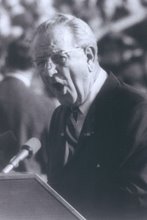
Photo was taken around 1938-40? -- about 70 years ago! I wonder what the next such photo will look like?
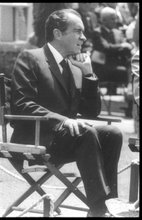
JR: A gem, Al. Glad you provided idents. I never would have recognized Stan Griffin. Can anyone help identify the others in this photo?

Tuesday, February 12, 2008


Nelson Fisher, a renowned track journalist of the 919 persuasion, is a true gentleman. He personally mentored me through my horsebetting period and I am a winner because of that. The first time I went to photo the feature race at Del Mar, Nelson showed me the ropes since I had never even seen a horse race before. Damon Runyon might find that hard to believe but it was true. When it came time to bet, Nelson opined that the favorite was the most likely steed on the sheet so he helped me place a 2.00 bet. Our horse came in, paid 2.20 and I have not bet the ponies since. Not bad for a lifetime average.

Monday, February 11, 2008

Movies


It appears that very few movies made after the fifties or sixties are on anyone's list of favorites here. Mine too. It is not absolutely proven, but I think color is a viable dividing line between the truly great stories and the ho hummers of those decades. When I watch a movie, I want to be entertained or maybe have an emotion or two touched gently. I go for the black and white.

So I bought a DVD recorder for about 150 bucks and recorded all my old favorites off TCM as well as a bunch of even older ones I had on VHS. I wound up with over 700 flicks,(at thirty cents a disc). I have anything from Abbott and Costello to "Casablanca" (of course Rick was a thief and a cheat, how else could you love him?) to "Grapes of Wrath" or "Mr. Smith Goes to Washington". And for a night when you don't care to engage in conscious thought, let me toss in "It Happened One Night" , a charmingly silly bit of classic newspaper fluff. I admit I will occasionally cross the color line for something like "Bridge on the River Kwai" or "Father Goose" but not just because Leslie Caron has great legs and Cary Grant doesn't. Besides, who could possibly think there will ever be a better Fletcher Christian than Marlon Brando. Not even Clark Gable. Not even in black and white.

BANG THE DRUM SLOWLY

JERRY WINDLE writes:
MORE BAD NEWS FOR NEWSPAPERS: "In just the past few weeks, The San Diego Union-Tribune eliminated more than 100 jobs, one-tenth of its work force. The Chicago Sun-Times began a round of deep newsroom layoffs, then put itself up for sale, and publishers in Minneapolis and Philadelphia warned that tough economics could force cuts there."

JR: The article is from the International Herald-Tribune, and it talks about the problem of shrinking ad revenue and dwindling subscriptions as an industry-wide problem. The story says combined print and online advertising dropped 7 percent last year. Of course, for printed papers, the drop was even worse.

PETER KOELEMAN writes:
Echoing the article Jerry Windle saw in the NY Times, we just lost 90 percent of our photo production staff (seven jobs). Our paper is going to automate the process with software called Intellitune. Not the same quality results but cutting payrolls and expenses is apparently a bigger priority than quality. Not a good time for newspapers. The Star Tribune has lost $75 million in revenue over just two years and the downward curve isn't straightening out.

JR: Peter is Director of Photography at the Minneapolis Star Tribune.

TOM STINSON writes:
Jerry Windle mentioned that the U-T has eliminated one tenth of its workforce. That's probably true, but some departments have been hit much harder. Four or five years ago the Library had sixteen employees. Now it's down to six. In December the Library still had nine employees. Since then three have been cut, including yours truly. My math isn't too good, but that's a lot more than ten percent. The Library is now having difficulty performing some if its basic functions. Does anybody care?

JR: I suspect everyone in this group cares, Tom, and I know I was stunned to hear you were let go. Hope you've hooked on somewhere else. Keep us informed.

Note: All this downsizing came long after I left the paper. Even at the time I was there, television was becoming the obvious news medium of choice into the future. And that has pretty much come to pass. TV will never be able to provide the same kind of gritty, close to the gut news that newspapers were absolutely made for and that is a sad loss. I am not ready to pronounce a eulogy for print, but I think to a great extent, the patient as we know it, is already terminal.

ADVICE TO THE WORLD

ELSON IRWIN writes:
What I would tell the world would be what my father told me on his deathbed when I was just eleven years old. He knew, of course, that I was a great western movie fan, so he said to me, "Elson, always ride the white horse." It didn't take a nuclear scientist to understand that bit of advice.
In the majority of the old western films, the "good guy" rode the white horse: Buck Jones, Hopalong Cassidy, the Lone Ranger, Bob Steele, Charles Starrett, Ken Maynard. (Several didn't such as Gene Autry and that Roy feller, but then, they weren't real cowboys.) The super "good" guys rode white horses and wore white hats. There was a certain significance in that. The bad guys wore black hats and had black mustaches. To this very day, it is difficult for me to trust anyone who has a black mustache. So, the immortal words are: "Ride the White Horse." I have tried to live by that credo. I have not always succeeded, but it's kept me out of jail.
I would like to have etched on my tombstone: "He rode the white horse."

JR: Elson is responding to Joe Holly's question "If you had the opportunity to tell the world one thing, what would that one thing be?" I like Elson's answer because it is only five words, yet it carries so much meaning.

THE TIES THAT BIND


JERRY RIFE writes:
In the '60s and '70s, a quick glance at the UT staff would have given the impression that we were all cut from the same bolt of cloth. Perhaps more than anything, that impression was conveyed by a simple strip of clothing, the necktie.
Every man wore one. (And since there were few women in the newsroom, that meant nearly every person) Photographers, whether shooting a bloody corpse or a society matron, would not have been caught dead without a tie neatly tied.
At first, the neckties were dark and subdued. They gave an air of gravitas while being able to hide a gravy stain. As the decade rolled on, newsroom ties exploded in a riot of color and design. They blossomed like flowers in springtime.
But it is the nature of flowers to wither and die. So too was the tie to fall from our collective neck like some pooped pansy.
When this picture was taken in September of 1981, autumn had already arrived for the UT necktie. Like the last rose of summer, a tie-adorned Charlie Sick was faced with a changing climate. The open-collared ruffians are (l-r, in back) Don Bartletti, Barry Fitzsimmons, Phil McMahan, Joe Holly, Jerry Rife, John Gibbins and George Smith.
I forget the name of the guy fingering Charlie's tie.
But I remember so well the time when the tie died.

Note: I well remember both the ties and the outrageous "psychedelic" colors and patterns of the 70's. Sally used to find the most ridiculous material and then hand make mine, about six inches wide, pink, orange, flourescent purple... and glow-in-the-dark would have been at the top of the wish list.

SECURITY, SECURITY, SECURITY

BILL OSBORNE writes:
Here's a potential new thread: U-T security guards. These are almost invariably good people who work hard and do what they can to uphold the best interests of the company. Over the years many of them become members of the club of people we see every day and people we miss when suddenly we don't see them anymore, regretting that we did not make a greater effort to engage them. Still, there are some great stories about our security people.
Here's one of them: Back in the early or mid-1970s, during the days of the Arab oil embargo and odd-even gasoline rationing, there was a reporter at the Tribune named Bob Dorn, an iconoclastic fellow whose name has come up a couple times before in the 919 newsletter. Bob and I rented the Cardiff home of Union financial writer Wayne Carpenter while he was sailing around the world with his family, but we could not carpool to work during the gas crisis because of significantly different schedules. Bob drove an ugly yellow Fiat with windows that were forever coated with the slobber of his mangy but lovable dog, Sumo. One day at work, Bob discovered that his Fiat was out of gas in the parking lot. The car next to his belonged to fellow Trib reporter Barbara Herrera, so Bob asked Barbara if he could siphon a gallon or so of gas from her car to get him going. She agreed and Bob started doing his siphon thing. As Bob told the story, the next thing he knew there was a U-T security guard behind him, gun drawn, demanding that he halt the gas thievery. Bob, who on any given day could easily pass for a gas thief, talked fast and all ended well, with no casualties. But Bob spent the rest of the day calculating the odds of whether that security guard was the one who carried the bullet that day.

Were you really a newspaper man, Grandpa?

JOHN PRICE writes:
This is John Price on my Yahoo address on the road. I can't access my regular email. I am on a business trip to Florida. I know, so sad that I had to leave the snow and sub-zero weather of Idaho for global warming or whatever you have to suffer through here in Florida in the winter, but such is the call of business.
I just want to agree with you one hundred percent on writing our life history. My family has done that for probably 150 years and even though some of them are little snippets of information, they are absolute treasures. When I read about things like their feelings for home and hearth in England as they were leaving for the wilds of America, I can understand who they were a little better and what they faced in life. That is precious to me if no one else.
Shortly after I joined this group, I opened a blog called "My Newspaper Days." I have been posting some of my own experiences, as well as some of yours that apply to me. I was surprised at the reaction from my own children. They love it! I have saved ALL the 919 messages and plan to sort through them and post or archive a lot more when I get older and have more time ... that's a joke! ... the older and more time thing. But like it or not, our era is passing, and the next generation will probably have no idea what a big-city newspaper was about or what being a newspaper man/woman in the twentieth century meant. We helped create that mystique. That should be recorded for those who are going to live in a society that will never understand the experience that was a major part of our lives and indeed, a major part of our society. I want my kids and grandkids to know about all of you and what role the U-T, with all its warts and blemishes, played in my life and in the world we shared. Thanks Jack, to you and all the rest of you 919ers.

JOHN PRICE writes:
Dateline: Ocala Florida, working.
Greetings from my laptop neatly propped on my chest as I recline beside the pool. I left Idaho last week after a rather nasty snowstorm when we had to squeeze with both hands to get 19 degrees out of the thermometer (that's up from sub-zero the week before). Today it was 89 degrees without a snowflake in sight. The guy I have been working with is from Alabama and asked a rather significant question: Why do you live in country that gets that cold? Boy, will he be surprised when I come up with an answer.
Joe Holly. I discovered I don't have my blog address in this computer but will post it when I get home. In the meantime, I am absolutely delighted by the genius of your "One Thing I Would Tell The World" concept. I deeply apprehend that responses by some of our group may forever change society, at least as we perceive it, but this is going to be GOOD!
Chuck Boyd. Next time I visit my son in Savannah I will call and see if I can find my way to Charleston
Nash Metropolitan: I had a turqouise and white convertible that was a little charmer. And the gearshift was indeed almost on the column,but the column was a bit too short. The manual shift lever actually stuck out of a bulge in the dashboard just below the speedo. Very innovative. Wish I had that little car back.
OK, I really have to turn over now, but I cannot figure how to type in that position.

Friday, January 11, 2008

One comment on two subjects.

I was always of the opinion that tipping was a thank you for good service and I confess that I may have been a bit impecunious in my gratuities. Then my daughter waited tables while at college, and I learned that these young folks are frequently paid only about half the minimum wage. I guess the theory is that generouos tips will make up the difference. I also learned that in its infinite wisdom, the IRS has determined that all food service employees receive full and benevolent tips all the time. And since the tips are obviously paid in large amounts of cash, the employees are told what amount to claim on their taxes whether they receive it or not. I don't know how one would figure what tips a person should have received over a year of waiting tables, but I am certain beyond doubt that the IRS has a very fair and equitable formula so that these wealthy waitresses and layabout busboys don't embark on a life of crime by defrauding the government of its fair share. I am much more generous now and I no longer consider over-tipping a mortal sin.

Like Jerry Remmers, I too embarked on a leisurely drive down Highway 1 in a 30-foot motor home; the one that Joe Holly and I shared. It was a lovely drive... for the first five miles. Then I found that herding a rolling motel around tight curve after tighter curve, flirting with spectacular drops into the ocean on one side and picturesque solid stone cliffs on the other, all the while leading a long parade of impatient Camaros and irate Porsches at 15 miles per hour across those narrow bridges was a lot of work! By the time we reached safe terrain, I was exhausted, and my arms felt six inches longer from pulling on the steering wheel. My wife was in a state of fear-induced catatonia and the only scenery either of us had seen the whole trip was when we would open our eyes to see how close the dropoff at the edge of the earth was coming to our wheels. The kids loved it and wanted to "do it again!"

Friday, December 21, 2007


I never did encounter “Trib” , the gorilla donated to the SD Zoo by Jim Copley, but I cuddled Alvila who at the time was a twenty pound black fuzzy baby. I was doing a story on the nursery at the zoo and it was feeding time. I don’t recall if I fed Alvila her bottle or just dandled her on my knee until time for her nap. I do know I did NOT change her diaper. That was 40 years ago. I saw a recent blurb for the zoo, and it featured my little buddy Alvila, a handsome figure to be sure, all 800 plus pounds of her. I imagine she can sleep anywhere she wants!

I also had the occasion to drop over to the Civic Theater to do a photo of Beverly Sills. I am not a fan of opera, I am too culture-deficient, but I had an absolutely pleasant photo session with her in her dressing room. She was a remarkably friendly and charming person, especially for a ‘big name’. I suppose that is why she was known as “Bubbles” Hers is the only photo of an opera personality that I bothered to keep. I would also put Charlton Heston and Carol Burnett in that class of biggies who seemed to be genuinely nice folks, which niceness was not just part of their public personna.

Monday, October 29, 2007

San Diego Fires

Photo by John Gibbons, UT
Photo by Charlie Neuman, UT


For the past week, there have been devastating fires in San Diego. Over 500,000 people were evacuated and 1500 homes were destroyed. The 919 Gang was offline for a week as Jack Reber was unable to go to his home in Ramona. His, and all the others that I have heard of from the 919 gang, homes were safe. I sent him this message today:

I was very glad to see you came out of the fires relatively unscathed, Jack. I covered several of those nasty things for the UT and understand how devastating they can be. I happened to be in SD a couple of years ago when they tried to burn Tierra Santa etc, and got a good reminder of why they call them "wild fires" My wife's cousin lives south of Mission Valley and had houses all around him burn but the fire chose not to come up his canyon.

Is there anything that 'outsiders' can do to help? Perhaps a 919er or someone in Ramona you know of who needs ??? Or after things calm down a bit, there might be someone, older or widowed etc. There are a myriad little things that get forgotten in a disaster. I have had two brothers lose their homes to fires and I understand a bit about that. I suspect there are a lot of folks in this group who would be glad to help if they knew who or where or how.

My son Nathan and our Spanish exchange student Javier and I went to Hawaii several months after hurricane Iniki blasted through Kauai in 1992. It is the worst recorded storm in the islands and there were lots of folks who had no insurance or assistance and were living in temporary digs, even tents. Others had their roofs blown away and were living under huge blue tarps that covered their houses, while they tried to gather enough money to start repairs. We were able to join one of the work gangs for a week or so. The gangs were simply neighbors helping neighbors to start the re-building process when there was no more help coming from outside. We helped take off damaged roofs, tore an unsalvageable building down, helped clear the debris. It was not all hard work though. There were other neighbors who brought incredible Hawaiian food around for the crews! They were simply trying to give each other a little breathing room as they figured how to start their lives over.

Nathan, Javier and I also helped an old kamaaina Hawaiian named Tony Wong put a new roof on his house after his insurance company went bankrupt. Tony had gotten shingles somewhere but had no money to pay anyone to put them up. He was too old to climb the ladders or help shingle, but he easily made up for it by telling us non-stop stories about his life on the island while we worked. What a great experience for my son and me... and Tony's new red roof was the pride of Kekaha Road... even if the shingle lines are a bit wavy.

Email from Jerry Windle:

John,
You been gone longer than I but I kind of missed being in the thick of the wildfires this time around now that I are retired. Last time in 2003, I worked non-stop for several days. One lab tech was sick and the other had been evacuated so I worked 10-12 hour days. Even though I was not out there on the lines, I was in the newsroom downloading digital photos and placing them in the archive system and folders so the editors could easily find them. I enjoyed sitting there and listening to all the bickering going on behind me.

I never got into the politics of the newsroom. When they combined the papers in 1992, I got "reclassified" taking an $8,000 loss per year in income so I was bitter for several years and finally realized there was more to life than the UT so I went in did my job and that was it. Usually did a lot of personal work as well - that is once the company work was done.
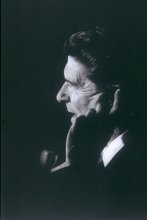
Kind of like an old race horse, I wanted to be back in the fray of things again.

My reply:

Hey Jerry.... Yeah, I miss it. Its the old firehorse thing I suppose. I watched the fires on TV and found myself thinking... if I were on that little ridge right there, I could get SUCH a picture of that fire snake running up the other canyon!!! It was so much fun back then, how could we not get all nervous and twitchy? But I am also realistic. I would never want to go back, even if I could. I remember the politics and the stress... ok, spell that BS... and the long boring stuff with those three ladies and that stupid piece of paper... But the rest sure was fun wassnit?

Tuesday, October 16, 2007

Truth and Telephoto lenses


Ah, the dreaded Wide Angle Telephoto lens!!! How did I manage to forget that one? I recall many a cold winter evening, gathered about the pot bellied stove in the photo lab, the lively philosophical discussions as we delved into the mysteries of light and photography... images and editors. Truth and telephoto lenses. Who would not long for the day....

As I recall, it was Al Sund who stirred the congregation up over the Truth in Telephoto issue. The position that most of us took, picture editors included was: “the longer the lens, the more compression of the image.” Thus the editorial objection to Windle’s street scene taken with a telephoto lens and where all the signs and power poles looked as if they were so close they were rubbing together. The photo editor determined the telephoto lens had rendered Truth altered and the photo would not be appropriate to run. Al’s position remained that it was not the lens at all, but simply the position of the camera in relation to the subject. Further, it was not distorting the truth, but representing it exactly as it appeared. That is, Al contended, if you are a given distance from a given subject, the “ distance compression” will be exactly the same, regardless of the focal length of the lens you use to view it. He even went so far as to say that it would actually look the same to your eyes without any additional lens. The reaction was immediate and passionate... mine included.... “Friend Sund, thou speakest heresy I say, HERESY! Everyone knows it is the lens that compresses the apparent distance between objects! How about looking through binoculars? Huh? The lenses compress everything together. Any fool can see that.” At least we were right about the ‘fool’ part.

As a converted disciple of Al Sund, I went out and took these photos today. They are taken with a 28mm wide angle and a 210mm, mild telephoto from the same position. Yep, the compression and distortion in the telephoto is obvious. The train cars are in reality about 60 feet long and about 8 feet high, say an 8:1 ratio and they look like that... close to the camera... in the 28 mm photo. In the telephoto picture, the distant cars appear to be (quoting Pogo) squeened down and squeened together so that now they look shorter than they are tall, a less than 1:1 ratio. The billboards, which are really alongside the freeway, look like they overhang the train cars. And check out the impossible curve of the road. Yup, it is all distorted. And that nasty distortion, obviously because of that darned old telephoto lens, is what the photo editor objected to .

In the search for truth, I now offer the third picture... which is actually just a cropped and enlarged section of the 28mm photo. As you can see, when the objects are the same size in the photo, and still same distance from the lens, whether the wide angle or telephoto , they are virtually identical! Brothers and Sisters, we have found the elusive Wide Angle Telephoto!

Well, ok, the resolution, clarity, detail are obviously much worse in the 28mm pic when it is enlarged... soooo, does that make the wide angle shot the worse offender in the Truth Altered category? I can tell you that is how they appeared to my eyes but I wear glasses, so maybe I can't see what is truth?

At least, Al Sund was right about telephoto lenses.

Friday, October 12, 2007

I enjoyed Jerry Windle’s reprise of various camera memories from the old days. I never did carry a Yashicamat for the paper, although I did own one. I bought it from the AP staffer after I sold my own Rolleiflex to buy a sub-miniature Tessina from Stan Griffin. Several of the photogs had Rolleis at the time but then Stan bought the petite and delicate Mamiyaflex as the camera du jour for the whole staff!!! That was a twin lens monster! They were bigger and heavier than a Remington standard typewriter and had interchangeable lenses the size of two sewer pipes. They did make good negatives though.

I used my shiny new Mamiyaflex C33 the time I was assigned to shoot Governor Reagan (in the photographic sense) when he was running for president. The Copley power structure had made arrangements for me to ease past all the security and get an exclusive photo at the event. The press corps was sequestered on a little patio outside someone’s La Jolla mansion and were told there would be no photos!. When the moment arrived, I was whisked into a parlor where Regan and a couple of the Republican faithful, one was a judge as I recall, were to pose exclusively for me... well, OK... for the Copley Press. I lined everyone up in a ‘natural’ pose and prepared to take the photos. I was convinced that each would undoubtedly be worthy of the Pullet Surprise. I pushed on the shutter... and nothing happened! That will get your attention! “OK, once more now....” Nothing! The shutter lever on my new camera would not move and I could not take the picture. By the third effort, I was developing a serious aneurism and the Governor cum President was getting more than a bit peeved as he stood with his best campaign smile pasted on, glaring at me and waiting! Panic was infusing my fevered brain when I noticed the safety-interlock lever on the side of the camera. It was a little knob that prevented the film from being exposed while the lenses were off. It also locked the shutter when engaged and it was doing its job admirably on this occasion! I don’t recall ever hearing such a sweet sound as when that shutter clunked the way it was supposed to. I got a magnificent photo of the three dignitaries and slunk off into the night to nurse my seriously battered ego.

Another time I used Phil McMahan’s Leica. Now THAT was a camera you could learn to love. I recall that Beverly Beyette was doing an investigative piece that turned into a series on nursing homes for the elderly. Beverly was pretending to be looking for a home for her aged mother and I was her ne’er do well brother, I think. I was supposed to get photos without anyone knowing what we were doing. I know this sounds like it came right out of an old James Cagney movie “The Picture Snatcher” , but I borrowed Phil’s Leica, hung it around my neck under my shirt with just the lens sticking out between the buttons. I could then move my ultra-wide, psychedelic tie aside (remember those?) and take pictures. The plan worked. Beverly would talk to the nursing home person about taking care of dear old Mother, to keep them busy, and I would try to wander aimlessly off to get the photos. The Leica was compact and so quiet you couldn’t hear the shutter if you were standing next to me. I took several by just turning away from the person. We got dramatic photos of conditions inside some pretty nasty “care” facilities. The paper ran the series and later, Copley Press published it in a booklet. As I recall, there was a major shakeup in the requirements and oversight of California care facilities as a result.

Friday, September 14, 2007

JOE STONE, REPORTER


I have always liked this picture. It is of Joe Stone, a metro reporter on assignment, as he thoughtfully writes down his impressions of the spring wildflower bloom out on the desert of Borrego Springs. Thats the kind of story some crusty reporters would consider beneath them. Joe was a good newsman and I think this photo proves it. Joe's brother was Milburne Stone who played Doc for many years on the classic tv series Gunsmoke.

Wednesday, September 5, 2007

U-T HELICOPTER 09NOVEMBER

Photo taken from the UT helicopter 09N. I loved flying in that bird with a crusty pilot named, of course, Pappy. You can see the door is off and one of the blurred rotors in the sky and my knee, bottom center.

BETTY PEACH-TSCHIRGI writes:
You mentioned a need for fresh subjects from the 919 Gang. This may have been covered previously, but I do not recall reading memories of the Copley Chopper that was parked at Lindbergh Field, and was on call for the Tribune city desk. The helicopter could be at the paper's pad in less than 10 minutes.
The landing pad was reached via the lunch room and big open deck added above the Tribune's annex building, if memory serves.
It was always such fun to get to the pad in time to watch the noisy beast approach from the direction of the Grant Hotel diagonally across the Land Title Building, and hover inches above the pad. A photographer and I waited at the foot of a half dozen stairs until the helicopter door opened, our signal to dash up the steps, crouching low to keep the head out of the path of whirling blades.
Liftoff was immediate, the nose tipping forward to pick up speed. the sensation of diving into the pavement was a shot of adrenaline every time. The pilot must have startled people on the street, for he didn't level off until the last second.
When we had a small machine, I always sat in the middle so the photographer had the window seat. Sometimes the door was removed to give the photog wider view. Sturdy seat belts recommended.
One assignment I remember especially because of its rarity: unusually heavy rains had flooded all the streams in the county and had washed out the approaches of the Santa Fe railroad bridge south of Oceanside.
The adjacent highway bridge floor was under water, so it was closed on both ends.
San Diego was essentially cut off from the rest of the world ... no rail, no road ... ah, but the wonderful helicopter came to the rescue. We left the office about 9 a.m., flew directly to the target flood, and returned to 919 Second Ave., in time to have photos splashed all over page 1 of the home edition.
All hail the power of the whirlybird!

My comments added:

Thanks Betty for jogging those helicopter memories. I loved flying in it too. It was an early Bell helicopter, the kind with an open tail boom and a huge plexiglas fishbowl bubble to sit in up front. You REALLY got the sensation of flying. I remember its radio call sign was Zero-Nine-November... niner, if you wanted to be really cool. I remember the pilot was a crusty old aviator called Pappy, what else? I never did know his last name and can't imagine why I would I want to. My favorite part was also the take off from the UT roof pad. Pappy would lift it up enough to clear the railing on the pad, then tip forward and swoop out over Second Ave, past the unforgiving building that towered above us on the right...was that the Spreckles Bldg?, and skim the parking lot and the UT garage on the corner to the left as he climbed. He seemed to think it desirable to get above all the buildings and power lines that surrounded 919.

What a lovely way to travel!

And Betty, I well remember that you always took the center seat so the photog could ride shotgun. I know that was a sacrifice, since you are a pilot yourself, and I always thought it was a class thing for you to do.


Tuesday, August 28, 2007

IN DEFENSE OF CORVAIRS

I well remember the red and white Corvairs that we had as “photo cars” or “camera cars”. In their defense, they really weren’t bad little cars. I think even Ralph Nader later admitted he gave them a bit of a bad rap with some questionable engineering criticism about the handling. I owned one for a number of years. (I enjoyed it, even though the threads were stripped in one spark plug hole and it had the quirky habit of popping the hot sparkplug out of the aluminum head where it would dangle by its wire while the engine made a loud chuffing noise until I could get it shut off. I kept a pair of pliers in the car to thread it back in and we would be soon on our way.)

Back to handling... I quickly found out that if you pushed the car into a corner, the back end might well come around and meet you on the way out. But once you learned to anticipate all that weight in the back, it was really a pretty nice handling car and you could do some fancy two-wheel drifts in tight curves and come out of the turn looking like you knew what you were doing. Of course, I would never have done that in a UT car! I have owned a couple of Porsches as well, and there ain’t that much difference in the way you drive the two although the Porsche is much better balanced and refined with its small 4-cylinder engine than the heavier Corvair pancake six ever thought of being, of course.

I would have to vote a thumbs down on the white Ford Mavericks that followed the Corvairs, and Stan didn’t keep the Fords too long. I liked the red and white Chevy Novas which replaced them. They were full size cars and much more comfy, even those basic models with few amenities. I think they actually had an AM radio. After that came the Pinto station wagons which were all white with blue lettering on the doors as I recall.

Like Thane, I almost burned one of the Mavericks up covering a wild fire, somewhere around Poway. I had parked the car on a road overlooking a little arroyo with the fire on the far side. All the windows were opened in the 100 plus degree heat and wind. I left the driver’s door open and walked up the hill to get some shots of a fire crew working where the road ended. As I was shooting my pictures, I looked back and was stunned to see the fire had come around the back side of the hill behind us and was licking up to where the lonely Maverick was sitting. Fires can be very nasty things if they can sneak up behind you. I managed an explosive comment that seemed appropriate at the time, and made a dash for the car just as a single gust of wind whooshed the flames momentarily in through the open window on one side and out the open door on the other. It didn’t do any damage other than leaving a bunch of hot ashes on the front seat, so I jumped in the car with the intent of getting my backsides out of there with a maximum of haste and a minimum of bodily damage. By the time I got turned around, the fire crew was in their truck right behind me and I enthusiastically led the little bumper to bumper parade down the mountain in my stalwart little UT photo car as fast as the fire truck could push me.

Monday, August 27, 2007

UNION TRIBUNE PHOTO CARS

Chuck Boyd and a U-T Corvair

JERRY WINDLE writes:

PHOTO CARS -- I came to the U-T in August, 1967, this was just after the photo was taken that Thane mentioned with the photo guys posed around and standing on a camera car -- at the time a Corvair. I loved driving the Corvair, especially coming south on Hwy 163 and making the turn onto Fourth Ave, nice long curve and that little Corvair hugged the corner. I didn't know any better.
Someone mentioned photogs left their gear at the paper, and this was true. Eventually we had some 40+ photogs and only 8-9 cars. we'd have to come to work, get a job, sign out a car and when we returned, put the keys back on a hook. Naturally, we soon learned which cars were better than others and there was always competition trying to get the better ones. Later we discovered the keys would actually work more than one car. We'd get a key, walk all the way down to the cars only to discover the car we signed out was gone!
Not having our equipment at home with us came home when Caliente burned down. The late Ted Winfield lived in Chula Vista and had to go downtown to get his gear and a car and head back south to Tijuana. I was the next one in and didn't get there until 9-10 a.m., and it was still burning!
The cars had a roof rack so photogs could stand on top of the car, if necessary for a better point of view. Later cars proved unworthy and a few roofs got a little bent from this practice, much to the chagrin of management.
There is a photo of Jerry Rife sitting on top of a Corvair, I believe, with water up to the windows down on Market street, I think after a big rain.
Thane/Chuck was also correct in that there was an "undercover" car, again a white Corvair. Of course it stuck out like a sore thumb, and we always felt we'd be better off in the red and white car with U-T emblazened on it. Kay Jarvis and I went into Logan Heights with one once and the choke cable fell off. Thought we'd never get back. It was a piece of junk - they all were.
I am of the belief that the late Stan Griffin was responsible for the red and white color scheme with the big lightning bolt on the side and U-T "radio dispatched" cars on the side.
As mentioned, we eventually got Ford Pintos. We never had a say in what cars the paper got. In fact, I believe Thane actually sent a memo to the powers that be that he felt they were unsafe and he wanted to be on record in case something happened. Don't know if this was an urban legend or not, but the photogs admired Thane for standing up to management.
Here's a legend regarding the photo cars which IS true. The photog shall remain nameless. He went downtown on an assignment and parked in one of the Ace lots. When he came back, the car was GONE! It had been STOLEN! Of course, we all wondered who would steal such a piece of junk. Anyway, after a few weeks, we get a phone call from Ace asking if we were ever going to get our car!! Seems the photog forgot where he had parked and assumed the car had been stolen. To this day he swears it was stolen and parked in another nearby lot.
Nowadays photogs have a car assigned to them and have their gear in there with them. They have pagers and cell phones and still can never be found when needed! Ain't like the old days when we reported at our shift start time and went from there. Of course in those days we all swore it would be great to have our own company car.

JR: I should point out that Jerry is a car expert, in my opinion, although if memory serves, his main interest is in Fords. I remember someone telling me once that Jerry's wife didn't even know how many cars he owned, that he had some "hidden." Of course, in Ramona, no one hides cars. They are parked in the front yard, side yard, back yard, etc. The fellow down the road from me has eight vehicles of one kind or another on his property. Not a one of them less than 10 years old, and I assume half of them don't run -- at least they haven't moved in years.

Friday, August 10, 2007

I AM A NEWSPAPER MAN AND BOY


I was a newspaper man from the time I was about ten or eleven years old. Of course, I was a paperboy before I was a photographer. That was in the fifties when the Post Register was in its downtown plant. The press room fronted on Capital Avenue and had big picture windows so you could stand on the sidewalk and watch them print the paper. I loved to watch that. I got my papers delivered to the Highland Market, across the street from our town’s minor league ball park, along with two other paperboys. The driver would drop our wire-tied bundles about 4 oclock each afternoon. We would open them and fold the papers. I preferred to roll mine into thirds and tuck the fold inside the edge to make a nice compact roll that would throw well, (which delivery was forbidden by “Huffy” Huffman , the circulation manager) or slip into a rural mailbox neatly. The papers would fit nicely into the green canvas paperbags, the kind that you put your head through so the papers hung in pockets, front and back, like a lumpy pancho. Then I would start walking. If you had a bike, which I sometimes did, and could find where your little brother left it last, you could drape the bags over the handlebars in a precise way, making sure they could not swing sideways and throw you off on your head. Then you were set to cover your route. Mine was to the north and west.

I had the worst route that the Post Register had to offer. It was mostly in a very low income neighborhood known euphemistically as “Duttonville” after the family that settled it back during the Depression. I suppose if you took the poorest of the Joad family from “Grapes of Wrath” and intermarried them with the po’ folk from Tobacco Road on the day before payday, and put them in shacks, basement houses and various home made move-ons, you would have a large chunk of my paper route. I delivered papers there for about a year and I think I collected enough to pay my monthly bill once in all that time... twice if you count the time I left off a zero by mistake. It seems like I paid the paper 3 cents per copy and collected 5 cents from my customers and it must have been a dime for Sunday... which I delivered on Saturday. It was 35 cents a week for six days, I remember that, and I can still multiply 35 by any number of weeks in a month without thinking.

I did have some good sections on my route, down near the Snake River that runs through town. Doc Reese had an elegant home overlooking the river there and the houses were pretty nice for a block or so behind him. Then there were a couple of blocks of pretty much blue collar families... and behind them, the poorer end of my route. I didn’t know it then but I learned that the gene pool requires some serious periodic maintenance that it sometimes does not get. I also learned some second hand lessons like what the interesting results can be when a person is related to themself by marriage. And then behind these folks on my route, one of my favorite spots in all the world, the City Dump. You could find some good stuff there sometimes!!!

It was on my paper route that I learned about some of the esoteric lessons that life has to offer a young boy. Things like what an old man with no teeth talks like when he is drunk on cheap wine... and how to avoid getting sprayed when he tries to explain which week you CAN collect for the paper. Things like what the DTs do to a person... (delerium tremens.. a medical condition brought on by excessive use of alcohol with symptoms consisting of seizures, hallucinations and a loss of control of all bodily functions....nice! You can look it up if you are interested.) I recall once I saw a painter who worked for my dad and who must have been nipping at the paint thinner or something, had an attack of the DTs and was lying on his back, shaking all over. There was a piece of sandpaper under one hand and his hand was shaking so violently that I was sure he was going to sand a hole in the floor before the seizure was over. Not a particularly useful thing for a 12-year old boy to learn but at least I discovered first hand there are things in life I did NOT want to be part of.

Yes, having a paper route was an interesting segment of my early education.

I suspect this memory was a bit later, probably junior high age when I was older and wiser, but I will include it here anyway. Off to the east of Bannock Ave were I lived, were the Union Pacific rail yards complete with a real roundhouse and gigantic turntable for turning the steam engines. I can remember clearly lying in my bed and listening to the sounds of switch engines and freight cars being noisily coupled and uncoupled all night long. And occasionally, the mournful sound of a lonely whistle moaning in the night as a night train headed for the mines of Montana. I remember standing beside the track, long after I was supposed to be in bed and watching the dim lights of the caboose slowly fade into the darkness and wondering what it was like to be on board the train and heading into the fascinating unknown.

But I digress....

Beyond the yards, over near the Yellowstone Highway, north of the stock yards, was Idaho Animal Products, a rendering plant of some sort where they took in all kinds of dead animals, diseased and not, road kill, most bloated with stiff legs thrust outward rigidly. There were also parts and pieces of animals, slippery piles of unrecognizable glop, you name it. Inside that concrete building, I can imagine, they skinned the carcases out, broke them down, sliced them up, flayed them off the bones and chopped them into pieces to be rendered for the fat and lard and...well, I have no idea what they did. I do know that when the wind was right and they were cooking, the smell would gag a maggot. Across the highway and a short distance away was Ray’s In and Out, a busy little drive-in of the day. I recall how pleasant it felt when my friend, Steve Elder and I had a little excess change in our pocket and would walk the mile or so over to Ray’s for a 30-cent chocolate shake or something. A nickel more for malt. In one of those aberrations in behavior, peculiar to young boys, we somehow developed a bizarre game for the trip back home. If the Animal Products was cooking and we were feeling especially silly, we would get our shake and drink it as we walked. We timed our return so we would get to the switch yard just about the time we finished the shakes. Then we would sit downwind on the tracks, enduring in the fetid aroma from the Animal Products and making jokes and telling teenage lies until we discovered who would vomit up their shake first. Great fun! It helped to win if you had a big supper.

I just had a thought. I wonder what we smelled like when we got home? Perhaps that would explain why it was so easy to persuade our parents to let us sleep outside in the yard all summer long?